Design for Fiction: Speculative Futures
Critical Design & Diegetic Prototyping
My Role
Student
Supervisor
Prof. Dr. Judith Dörrenbächer
Tools & Tech


Design fiction is a critical design practice that uses speculative scenarios and diegetic prototypes—artifacts that exist within a fictional world—to explore potential futures and provoke reflection on the social, ethical, and political implications of emerging technologies. Rather than solving problems, design fiction asks questions: it makes visible the invisible consequences of technological change and invites us to critically examine the futures we are creating.
This approach moves beyond traditional user-centered design to engage with broader societal concerns, using storytelling, world-building, and persuasive artifacts to make speculative futures feel tangible and plausible. Design fiction serves as a tool for critical inquiry, allowing designers to explore "what if" scenarios that challenge assumptions and reveal hidden tensions in our relationship with technology.
Two complementary design fiction efforts were developed for this seminar, each examining different aspects of technology's impact on society. Select a project below to explore the research, methodology, and outcomes:
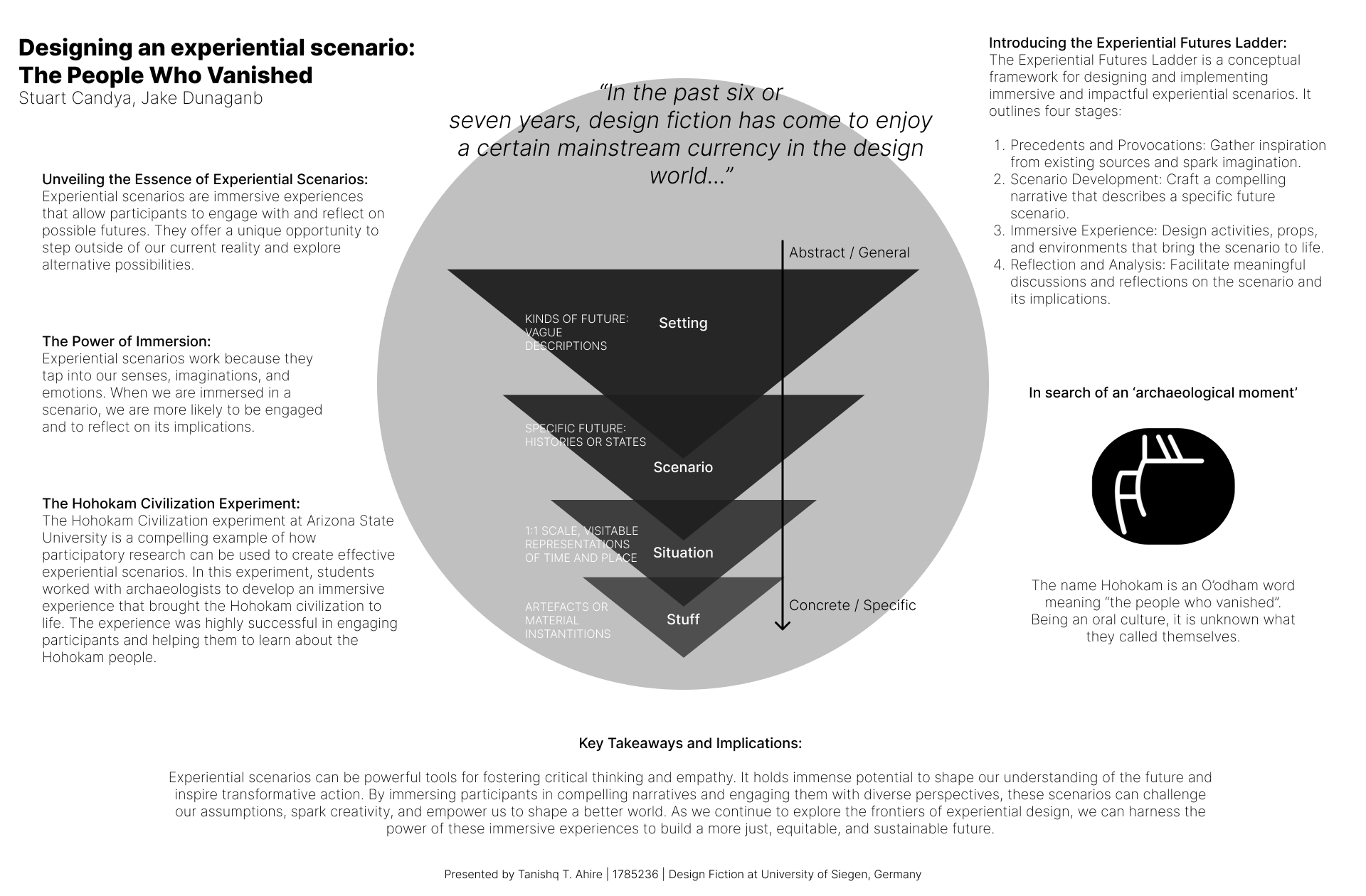
Designing an Experiential Scenario: The People Who Vanished
What if we could step into the shoes of the Holocene people, a mysterious civilization that vanished in the 15th century? The Experiential Futures Ladder, a conceptual framework for designing and implementing immersive and impactful experiential scenarios, offers a unique opportunity to do just that.
The ladder outlines four stages:
- Precedents and Provocations: Gather inspiration from existing sources and spark imagination.
- Scenario Development: Craft a compelling narrative that describes a specific future scenario.
- Immersive Experience: Design activities, props, and environments that bring the scenario to life.
- Reflection and Analysis: Facilitate meaningful discussions and reflections on the scenario and its implications.
The Experiential Futures Ladder can be used to design experiential scenarios that explore a wide range of possible futures, from utopian visions to dystopian warnings. It is a powerful tool for fostering critical thinking, empathy, and creativity.